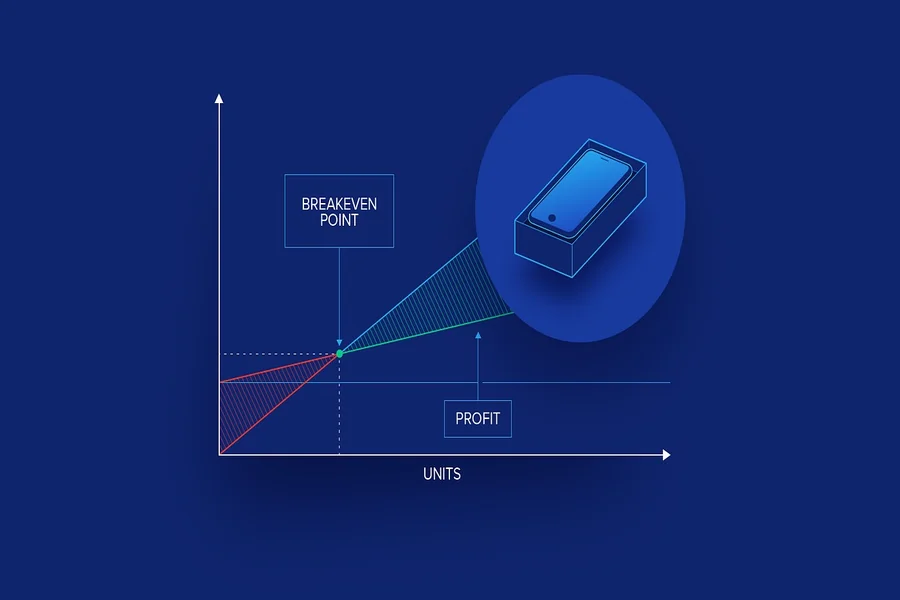
High-traffic online platforms dominate today’s digital economy. From e-commerce marketplaces and content platforms to financial and entertainment services, these businesses attract millions of users daily. While growth and scale often steal the spotlight, the real determinant of long-term success lies deeper, in unit economics.
For investors and business analysts, understanding how these platforms make money per user, per transaction, or per interaction is critical to evaluating sustainability.
What Are Unit Economics?
Unit economics refers to the revenues and costs associated with a single “unit” of a business. For digital platforms, a unit could be a user, a transaction, a session, or even a click, depending on the business model.
At scale, even small inefficiencies in unit economics can compound into large losses. Conversely, marginal improvements can dramatically improve profitability when multiplied across millions of users.
The Core Revenue Drivers
High-traffic platforms typically rely on one or more of the following revenue streams:
- Advertising: Monetising attention through impressions, clicks, or engagement
- Transaction fees: Charging a percentage or fixed fee per transaction
- Subscriptions: Recurring revenue from premium access or features
- Data & partnerships: Monetising insights or integrations
The challenge is that revenue per user is often modest. Platforms compensate for low per-unit revenue by driving massive volumes, making cost control essential.
Key Cost Components at Scale
On the cost side, high-traffic platforms usually incur:
- Customer Acquisition Cost (CAC): Marketing, promotions, incentives
- Infrastructure costs: Servers, cloud services, content delivery networks
- Payment processing costs: Gateway fees, settlement costs
- Customer support & compliance: Especially relevant in regulated sectors
For many platforms, CAC is front-loaded, while revenue accrues gradually over time. This makes payback period and lifetime value (LTV) critical metrics.
LTV vs CAC: The Central Equation
A healthy platform business typically maintains an LTV-to-CAC ratio well above 1. This indicates that each acquired user generates more revenue over their lifetime than it costs to acquire them.
However, in high-competition digital markets like India, CAC can rise quickly due to aggressive marketing and incentives. Platforms that rely solely on growth without improving retention often struggle to turn profitable.
According to McKinsey, platforms that focus early on retention and monetisation efficiency tend to outperform growth-at-all-costs models over the long term
Why Traffic Alone Is Not Enough
High traffic can be misleading. A platform may boast millions of users but still suffer from weak unit economics if engagement is shallow or monetisation is inefficient.
This is why analysts increasingly look beyond topline user numbers to metrics such as:
- Revenue per user (ARPU)
- Repeat usage and churn
- Transaction success rates
- Payment conversion efficiency
In some platform categories, users may generate value sporadically rather than daily. In such cases, cost discipline becomes even more important.
Payment Infrastructure and Unit Economics
One often-overlooked factor in platform economics is payment efficiency. Faster, more reliable payment systems improve conversion rates and reduce support costs. Delays or failures increase churn and operational expenses.
This is particularly relevant in India, where real-time payment systems have reshaped user expectations. Platforms that align payment speed with user habits tend to see better retention and lower friction costs.
Across the broader digital ecosystem, even niche segments—such as platforms referenced under My betting sites India face the same underlying unit economics challenge: balancing transaction costs, user acquisition spend, and lifetime value at scale. The business fundamentals remain consistent, regardless of category.
The Role of Network Effects
High-traffic platforms often benefit from network effects, where each additional user increases the platform’s overall value. While powerful, network effects do not automatically guarantee profitability.
If marginal users cost more to serve than the value they generate, network effects can actually amplify losses. Successful platforms carefully segment users, optimise monetisation for high-value cohorts, and limit subsidies where necessary.
Regulatory and Compliance Costs
As platforms grow, regulatory scrutiny increases. Compliance costs, legal, reporting, data protection, can significantly impact unit economics, especially in finance and entertainment-related categories.
Investors should factor in these costs when assessing scalability. A business model that looks profitable in early stages may face margin pressure as compliance requirements expand.
The World Bank has highlighted how digital platforms must adapt their economic models as they scale across regulated markets
What Investors Should Watch
When evaluating high-traffic online platforms, key questions include:
- Are unit economics improving with scale?
- Is retention offsetting acquisition costs?
- Does infrastructure cost decline as volume increases?
- Are regulatory risks priced into the model?
Platforms that demonstrate improving unit economics over time are more likely to deliver sustainable returns than those relying solely on growth narratives.
Final Thoughts
High traffic is an advantage, but only when supported by strong unit economics. In today’s digital economy, scale magnifies both strengths and weaknesses.
For business leaders and investors alike, the lesson is clear: understanding the economics beneath the traffic is essential. Growth attracts attention, but unit economics determine survival.