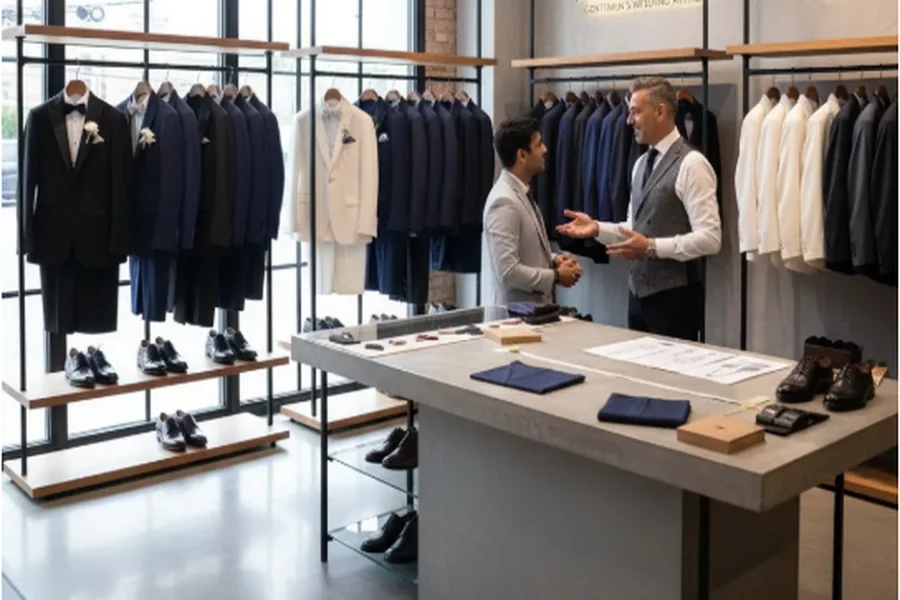
Fast fashion has trained shoppers to expect speed, abundance, and low-friction purchasing. A jacket can be ordered in minutes, delivered within days, and replaced just as quickly when tastes change. Yet bespoke tailoring continues to hold a distinct place in menswear because it answers a different question. Instead of asking how quickly a garment can be produced, bespoke tailoring asks how precisely a garment can respond to the person who will wear it.
That difference begins with observation. Bespoke tailoring is not simply a premium version of standard sizing. The process considers posture, shoulder balance, torso shape, arm position, preferred ease, and the way a client actually moves. Two people who both buy the same ready-made size may need very different patterns once these details are taken seriously. The craft lies in translating those differences into cloth, structure, and proportion.
Craftsmanship Is More Than Handwork
The word “craftsmanship” is often reduced to visible hand stitching, but good bespoke tailoring craftsmanship is broader than that. It includes judgment: how much structure a jacket needs, where a trouser should sit, how a lapel should roll, and how a sleeve should hang from the shoulder. Hand finishing can contribute refinement, yet the real value comes from the sequence of informed decisions that make the finished garment coherent.
Garment quality also depends on what cannot be seen from the outside. Internal construction helps a jacket keep its shape, while careful pressing gives cloth dimension rather than flattening it. Seam allowances, balance, and the relationship between chest, waist, and skirt all affect how the garment behaves after repeated wear. These are not dramatic details, but together they determine whether clothing feels settled on the body or constantly needs adjustment.
Fit Is a Process, Not a Number
Fast-fashion sizing is designed to serve large groups efficiently. Bespoke work moves in the opposite direction. Measurements are only the starting point. A tailor may record the chest, waist, hips, sleeve length, and trouser dimensions, but those numbers do not describe posture or visual balance. Fittings allow the maker to see how the developing garment interacts with the client.
This is why bespoke clothing can feel different even when a ready-made garment appears to be the correct size. The distinction is not simply tighter versus looser. A well-balanced coat should allow movement without excess cloth pooling in the wrong places. Trousers should fall cleanly while accommodating the wearer’s stance. The goal is not to force the body into a fashionable silhouette but to create proportion around the individual.
Personalization Has Practical Value
Personalization is sometimes treated as decoration: lining color, button style, pocket shape, or monogramming. Those choices can be enjoyable, but the more meaningful personalization is functional. A frequent traveler may want cloth that performs well across changing climates. Someone who spends long hours seated may prefer a different trouser balance from a person who stands most of the day. A business wardrobe may need understated versatility rather than novelty.
Within Bangkok’s tailoring scene, brands such as Jhasper Fashion Bespoke House can be understood in this wider tradition of personalized garment
making, where the relevance of a tailoring house comes from the connection between consultation, fitting, and construction rather than from a simple claim of superiority.
Slow Clothing Can Still Be Modern
Bespoke tailoring is sometimes described as old-fashioned because the process takes time and relies on established techniques. That does not make it incompatible with modern wardrobes. In fact, a slower method can be useful precisely because contemporary consumers are surrounded by rapid turnover. A garment designed around the wearer can remain relevant even when seasonal styling shifts.
Strong bespoke pieces are not necessarily ornate. Their value often appears through repeated use. When fit, cloth, and construction are considered together, the garment can become easier to wear across different settings instead of being tied to a short trend cycle.
Longevity Changes the Meaning of Value
Price alone does not explain value. A bespoke piece becomes more relevant when long-term wear, fit, and repairability matter. Better construction can support alterations, and thoughtful fabric selection can help clothing age more gracefully. This does not mean every bespoke garment will last forever, but the process is designed with continued use in mind.
That is why bespoke tailoring still matters in an age of fast fashion. It offers a different model of consumption: fewer assumptions, more attention, and a closer relationship between the wearer and the garment. The enduring appeal is not nostalgia for the past. It is the practical idea that clothing can be made with enough care to reflect a real person rather than an average size chart.