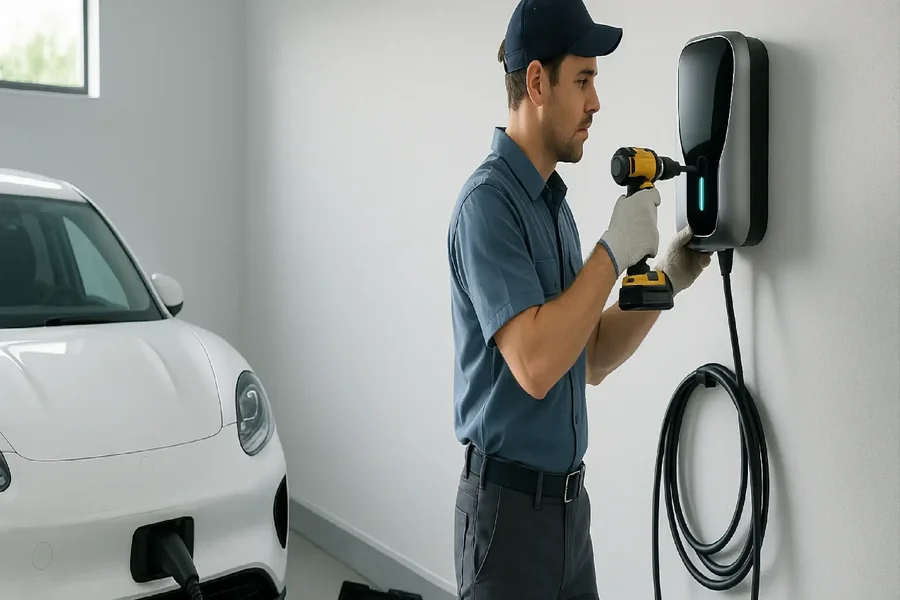
With electric vehicles (EVs) becoming increasingly popular across the United States, more homeowners are exploring ways to optimize their energy usage. One of the smartest strategies is investing in EV charger installation at home. While EVs themselves reduce dependency on gasoline, installing a dedicated charger can also directly impact your electric bills — often in ways that many people overlook.
This article explains how EV charger installation can help you save money, maximize energy efficiency, and create a sustainable lifestyle.
Understanding the Basics of EV Charging
Before diving into the savings, it’s essential to understand how home EV chargers work. Most electric vehicles come with a standard Level 1 charger, which can plug into a regular 120-volt outlet. While convenient, these chargers are slow, taking up to 20 hours to fully charge a vehicle with a large battery.
A dedicated Level 2 EV charger, typically installed by licensed electricians, operates on 240 volts, drastically reducing charging time to 4–8 hours for most EVs. Beyond speed, these chargers allow homeowners to:
- Schedule charging during off-peak utility hours
- Monitor energy usage with smart apps
- Improve safety with proper electrical connections
By switching from a standard outlet to a Level 2 charger, homeowners can better manage electricity consumption, which is a key factor in reducing monthly energy costs.
Reduced Electric Bills Through Off-Peak Charging
Many utility companies offer time-of-use (TOU) rates, which charge higher rates during peak hours (usually daytime) and lower rates during off-peak hours (evenings and nights). With a smart EV charger installation, your vehicle can automatically charge during the cheapest hours.
For example:
- Peak electricity rate: $0.30 per kWh
- Off-peak rate: $0.12 per kWh
Charging an EV with a 60 kWh battery during off-peak hours instead of peak hours could save nearly $11.00 per full charge, assuming a 100% battery drain. For drivers who recharge three times per week, the annual savings can exceed $1,700, effectively offsetting the upfront cost of a home charger.
Smart Chargers Maximize Efficiency
Modern EV chargers come with smart technology that allows homeowners to monitor energy consumption and set charging preferences. Some of the benefits include:
- Scheduling charges during off-peak hours automatically
- Adjusting charge speed based on energy costs
- Tracking total energy used per month
With this level of control, homeowners can reduce wasted electricity and prevent spikes in their utility bills. Smart EV chargers also provide detailed insights into charging habits, allowing you to make informed decisions about when and how to charge.
Incentives and Rebates That Further Reduce Costs
Many states and municipalities provide financial incentives for EV charger installation, including:
- Tax credits
- Utility rebates
- Reduced permit fees
For instance, in 2026, the federal government continues to offer incentives for residential EV charger installation, allowing homeowners to claim up to 30% of the installation cost as a tax credit. When combined with lower energy costs from off-peak charging, these incentives can dramatically improve the return on investment for your home charging system.
Avoiding High-Priced Public Charging
Home EV charging not only reduces electricity costs but also eliminates the need for costly public chargers. Public fast chargers can charge EVs at rates 3–5 times higher than typical home electricity costs. By installing a charger at home, EV owners gain convenience, reliability, and the ability to charge at a fraction of the price, ultimately saving hundreds of dollars per year.
The Long-Term Financial Benefits of Home EV Charging
An EV charger installation isn’t just about immediate savings; it’s a long-term investment. Over the lifespan of a vehicle — usually 10–15 years — a home charger can save thousands of dollars in electricity costs compared to relying on standard outlets or public stations. Additional benefits include:
- Increased home value: Homes with Level 2 chargers are more attractive to buyers
- Energy independence: Reduced reliance on fluctuating gasoline and energy prices
- Sustainability: Lower carbon footprint and contribution to green energy initiatives
When combined with solar panels or renewable energy solutions, a home EV charger can virtually eliminate the energy cost associated with driving—especially when paired with the cheapest electric rates in Texas —creating a highly efficient, eco-friendly lifestyle.
Choosing the Right EV Charger Installation
To maximize savings, homeowners should consider:
- Level 2 chargers for faster, efficient charging
- Smart chargers with scheduling and monitoring capabilities
- Licensed electricians who ensure safe installation
- Chargers compatible with your EV’s battery size and charging speed
By selecting the right charger and installation partner, homeowners can enjoy both convenience and cost savings.
Conclusion
Investing in EV charger installation is no longer just a convenience for electric vehicle owners; it’s a strategic way to reduce electricity bills, maximize efficiency, and take advantage of financial incentives. From off-peak charging and smart scheduling to avoiding costly public charging stations, a home EV charger provides tangible savings while supporting a sustainable lifestyle.
For MetroWest residents and beyond, this combination of efficiency, cost-effectiveness, and environmental impact makes home EV charging a wise decision — one that pays dividends both financially and ecologically for years to come.