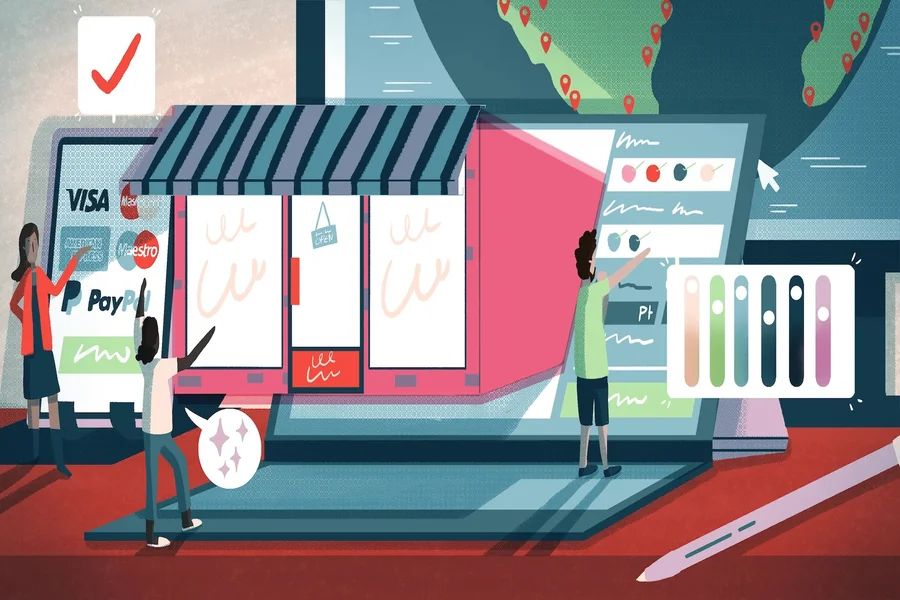
The international eCommerce platform is on the rise, and Indian exporters want additional venues beyond Etsy for selling their one-of-a-kind, vintage, and handmade items. With other alternatives to Etsy gaining prominence, knowing the best international eCommerce websites can enable Indian sellers to tap new markets, diversify audiences, and retrieve maximum returns.
In this article, we will discuss the best alternatives of Etsy for Indian exporters who are involved in cross-border trade, competitive fees, and seller tools that are robust. Whether you are selling handmade products or textiles or digital goods, these global eCommerce platforms can be utilized to bring your business to the global stage.
Why Shop Beyond Etsy for Global Selling
Etsy has long been a good place for Indian small businesses and artisans, but there are other international eCommerce websites to look at as well. Excessive competition, rising fees, and stringent policies have led many vendors to move to other international eCommerce websites. Additionally, diversification on more than one website minimizes dependence on one website and minimizes the risks of an unforeseen policy shift or site hold.
Some of the Etsy alternatives are cheaper, offer improved seller support, and provide access to niche markets. Indian exporters can introduce themselves to new markets using these websites, use localized payment gateways, and have easy logistical arrangements optimized for cross-border transactions.
Best Etsy Alternatives for Indian Exporters
1. Amazon Handmade
Amazon Handmade is probably the most well-known Etsy rival, with a niche marketplace for artists to sell handmade goods. As part of Amazon’s vast worldwide eCommerce community, it provides access to millions of potential customers globally.
Indian suppliers are preferred by Amazon’s FBA (Fulfillment by Amazon) scheme, which organizes storage, delivery, and customer service. The site is accessible with more than one currency, so purchases can be easy anywhere. Though there is a referral fee (15% average), volume of traffic and reputation of Amazon make it a great option for Indian exporters.
2. eBay
eBay is nevertheless a behemoth in the global eCommerce space, where sellers post handmade, vintage, and one of a kind items. eBay has a wider variety of items than Etsy, such as collectibles and used items.
Indian sellers are able to utilize the Global Shipping Program of eBay, which facilitates cross-border shipping within and beyond customs, as well as overseas shipping, conveniently. The platform also facilitates auctions and fixed-price listings, allowing sellers to negotiate on price strategy. Although even if eBay’s fee policy may be a little too strict, its global orientation makes it a good Etsy substitute for exporters shipping into diversified markets.
3. Shopify (With a Global Storefront)
For Indian sellers who wish to establish an owned brand, Shopify provides a good international eCommerce platform. Unlike marketplace rivals such as Etsy, Shopify enables businesses to launch standalone online stores with complete brand, price, and customer experience control.
Shopify’s multi-currency and multi-language functionality supports borderless selling. Third party logistics integrations also facilitate hassle-free shipping for Indian exporters. Although Shopify needs more marketing work than conventional marketplaces, it supports long-term scalability and brand independence.
4. ArtFire
ArtFire is a specialty marketplace for vintage, handmade, and craft supplies and thus a legitimate Etsy alternative choice for Indian craftspeople. ArtFire has a simple fee structure with no listing fees on anything and only a flat rate monthly membership.
ArtFire’s smaller user base means fewer competitors for your one-of-a-kind products to fight against. Its traffic is not as intense as Etsy’s or Amazon’s, but its traffic is dedicated buyers searching for such one-of-a-kind products. Indian sellers can take advantage of ArtFire’s emphasis on handmade products without the mayhem of the big sites’ crowds.
5. Bonanza
Bonanza is a new international eCommerce platform that supports handmade and unique products. It is seller-friendly and charges lower fees than Etsy. Bonanza also provides automatic listing tools to import products from other websites.
Indian vendors can use Bonanza’s Google Shopping and Facebook Marketplace integration to gain visibility. It also supports a “Booth” feature whereby vendors can customize their stores for improved brand building. Although yet to happen, Bonanza offers Indian vendors a risk-free method to pilot new markets.
Key Considerations When Selecting an Etsy Alternative
1. Fee Structures and Profit Margins
Various substitutes for Etsy charge varying fees—listing fees, commission fees, or membership fees. Indian exporters have to work out potential profit margins after deducting payment processing fees, transaction fees, and currency exchange fees.
2. Logistics and Shipping Solutions
International techfelts websites need to have efficient shipping and fulfillment operations to sell on them. Even though websites such as Amazon and eBay have integrated logistics programs, there are others in which shipping is not involved by sellers. Shipping cost, delivery time, and return policy need to be considered by Indian exporters before choosing a website.
3. Target Audience and Market Demand
Not all platforms create the same type of buyer bases. While Etsy is utilized to promote handmade and vintage items, Amazon Handmade is promoted to a broader consumer base, and ArtFire identifies specialized craft hobbyists. Indian sellers need to determine where their products will discover their best match so that they can achieve maximum sales potential.
4. Seller Support and Dispute Resolution
Effective customer care later becomes a priority in overseeing global eCommerce. Websites with well-established seller policies and courteous support personnel can provide timely issue resolutions, thereby seamless business transactions.
By selectively observing fee terms, logistics, and target markets, Indian sellers can select the most appropriate platforms to maximize reach globally. Further, accessing a direct channel provides business with strength and brand independence.
The international eCommerce market is huge—diversification on many platforms will ensure maximum reach, reduce risks, and succeed in the global online market.