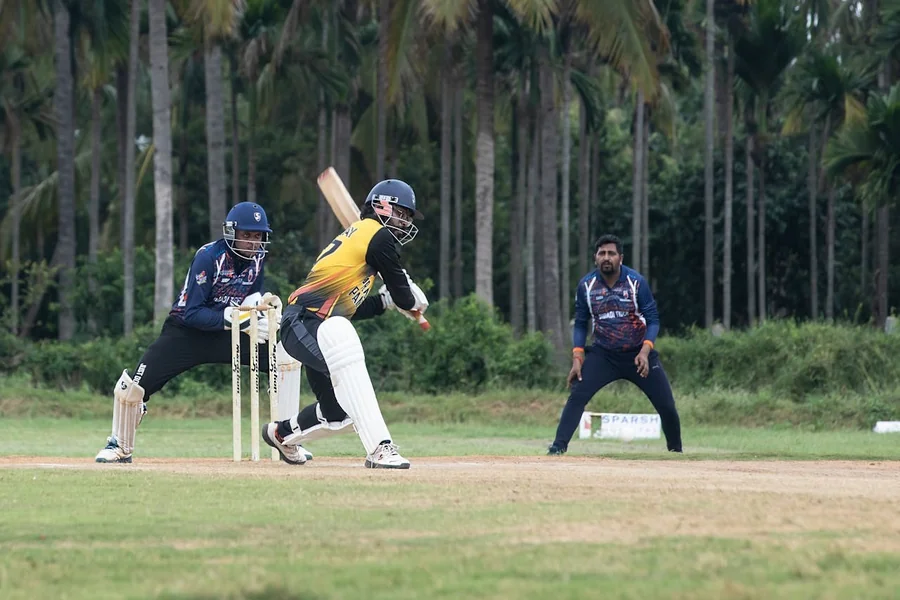
Live odds can feel overwhelming because they shift fast, often after moments that barely register on a broadcast. A string of dot balls raises pressure, a sloppy fielding error changes the chase equation, and one wicket can rewrite the match in seconds. That constant movement is the purpose – odds translate the game’s balance into updated numbers as conditions change. For newcomers, it helps to treat live odds as a way to read probability, not as a guarantee. Understanding what drives the shifts improves match awareness and reduces knee-jerk reactions to single boundaries or “short” prices.
What live odds actually mean in cricket
At their core, odds are a probability signal wrapped in a price format. When a team’s odds shorten, the market is indicating a higher chance of that team winning based on the match situation. When odds drift, the implied chance is dropping.
Different platforms display odds in different formats. Decimal odds are common in many regions. They show total return per unit staked, including the original stake. Fractional odds are also used. They show profit relative to stake. The important beginner concept is not the format. It is the implied probability hiding underneath.
A simple way to understand implied probability is to think in “chance language.” Shorter odds suggest the market sees a stronger chance. Longer odds suggest a smaller chance. That “chance signal” is why the numbers update ball by ball. In many criket match live interfaces, these updates appear alongside scoreboards and mini match trackers, which can make the odds feel like another layer of the live broadcast.
Live odds also incorporate what cricket fans already know intuitively. A chasing side at 30 for 0 after three overs in a T20 is in a different position than 30 for 2. The score is identical. The wicket situation changes risk, options, and momentum. Odds try to price that difference in real time.
Why odds shift: the match moments that move the market
Some odds movement is obvious. A wicket late in an ODI chase usually pushes the bowling side’s chances higher. Other movement surprises beginners because it is driven by “pressure math,” not just highlights.
Run rate and required rate matter because they define the difficulty curve. If the required rate climbs above what the batting side has shown they can sustain, the odds start moving even before a wicket falls. Dot balls can be more influential than a single boundary because they raise the required rate while consuming deliveries.
Overs remaining and wickets in hand operate like a sliding scale. Ten runs needed off twelve balls with eight wickets left is a different scenario than ten runs needed with one wicket left. The second case carries higher collapse risk, so the odds price it accordingly.
Conditions also move odds in ways that are not always visible. Dew can reduce grip for bowlers and make defending totals harder at night. A pitch that keeps low can make chasing difficult, even if the scoreboard looks manageable. Toss decisions can matter because they signal which side believes the conditions will favor batting or bowling later.
Reading the match context behind the number
Odds become more meaningful when tied to cricket logic. Instead of staring at the price, translate the situation into a few key questions.
Start with the chase equation. How many runs are needed. How many balls remain. What is the required rate. Then compare it to what has already been shown. If the batting side has scored at eight an over comfortably, a required nine is challenging but plausible. If they have struggled against spin and the required rate is rising, the pressure is real.
Partnerships change everything. Two set batters reduce risk because they see the ball well and can rotate strike. A new batter arriving during a tough phase raises uncertainty. That is why odds can move sharply after a wicket even if the run requirement has not changed much.
Format matters too. T20 odds can swing wildly because a single over can deliver 20 runs or two wickets. ODI odds often move in larger arcs. Test match odds behave differently again because draw probability and time remaining influence outcomes. A team can be ahead on runs and still have drifting odds if time is running out.
Field restrictions also influence movement. Powerplays create scoring windows. If a batting side fails to capitalize in a powerplay, odds may drift even without wickets because the chase becomes more difficult later when fielders spread and boundaries are harder.
Common misunderstandings beginners make
A frequent beginner error is treating low odds as certainty. Cricket punishes certainty. A short price often means “more likely,” not “locked.” A single collapse, a misjudged chase, or one brilliant over can change the entire match state.
Another mistake is overreacting to one flashy moment. A boundary looks dramatic, but it may not change the required rate enough to matter. Five dot balls in an over can be more damaging than a single six is helpful. Beginners often respond to highlights instead of to the underlying math.
Chasing odds swings can also become a trap. Odds move because the market is reacting to the same information everyone sees. If decisions are made based on movement alone, without understanding why it happened, it becomes guesswork dressed up as analysis.
A final misunderstanding is ignoring context like batting depth. A side with a long tail may struggle to finish chases once set batters fall. Odds often account for this, but beginners sometimes focus on the current batter alone and miss the collapse risk.
Read the numbers, keep the match the main event
Live odds can sharpen match understanding when approached as a learning tool. They highlight how cricket rewards wickets, how dot balls build pressure, and how conditions influence chasing. They can also lead to impulsive decisions if treated like a promise rather than a probability signal.
A few match-day habits help keep decisions deliberate:
- Set a fixed spend limit before the match starts and treat it as non-negotiable.
- Avoid reacting to single-ball swings. Wait for a full over or a clear phase change.
- Check the chase math first: runs needed, balls left, wickets in hand, and required rate.
- Read promotion terms and wagering rules carefully before using any offer.
- Take breaks during innings changes to reset attention and avoid emotional decisions.
- Treat odds as information. The match itself should remain the focus.
Learning to read live odds is ultimately about learning to read cricket. When the numbers are understood in context, they become less intimidating and more useful. The best result is not being “right” every time. It is having a clearer picture of what the game is asking from each team in the moments that matter most.